Common mistakes people make in A/B testing (and how to avoid them)
Jun 10, 2025
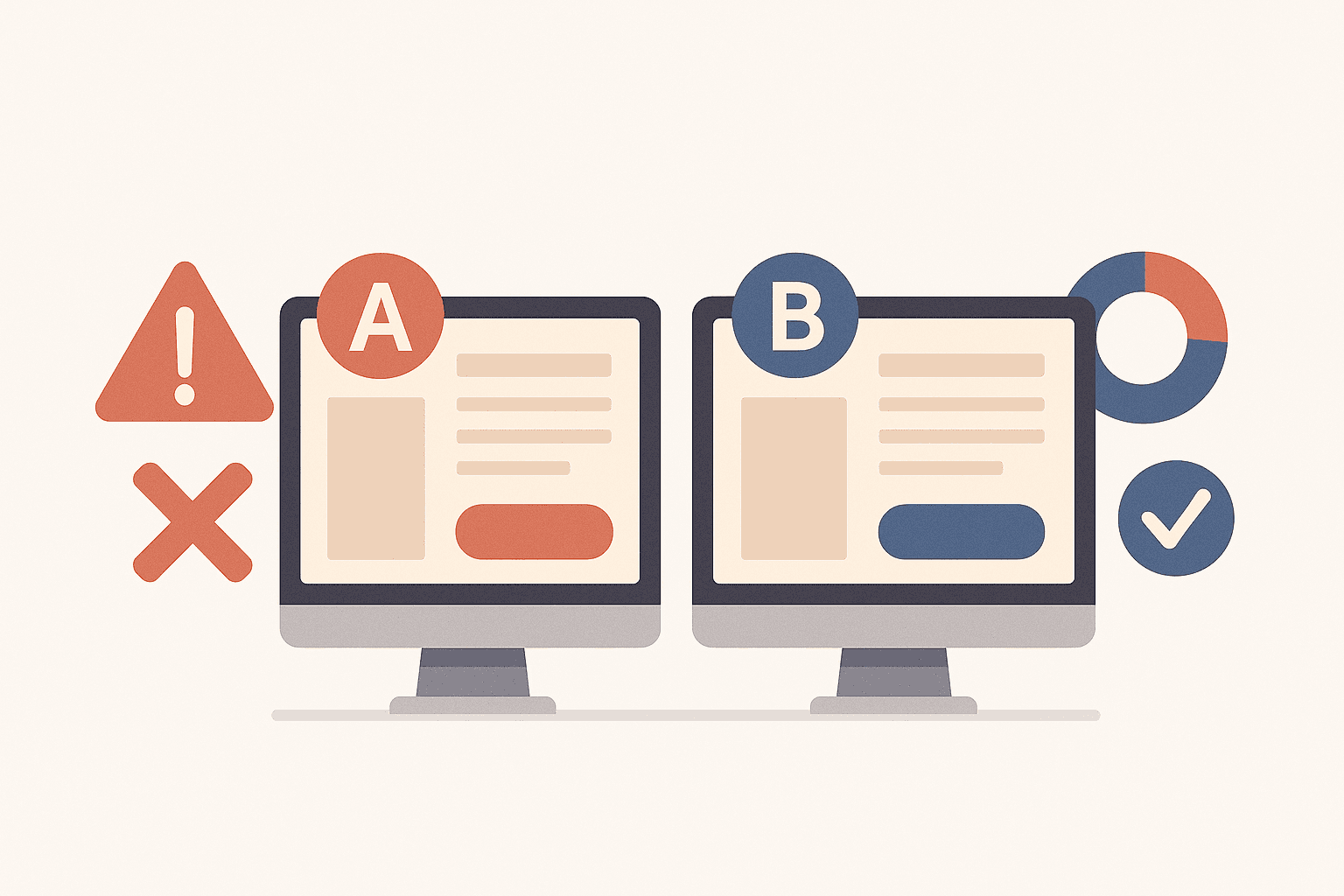
A/B testing sounds simple, you show two versions of something, see which one performs better, and pick the winner.
But in real life, it’s easy to get it wrong.
In this article, we’ll cover common A/B testing errors, and how to avoid them.
1. Not Having a Clear Hypothesis
One of the most fundamental errors is launching an A/B test without a clear hypothesis. You might think, "Let's just try changing the button color and see what happens!" While that sounds like testing, it lacks purpose and direction. Without a hypothesis, you don't know why you're testing or what you expect to learn.
How to Avoid It
Always start with a well-defined hypothesis. A good hypothesis follows this structure:
"If we change [X]..." (the specific change you're making)
"...then [Y] will happen..." (the measurable outcome you expect)
Example: "If we change the CTA button color from blue to orange, then the click-through rate will increase because orange creates more visual contrast and urgency."
2. Testing Too Many Changes at Once
Changing multiple elements (like button color, headline, and layout) in one test makes it difficult to know which change caused the result.
How to Avoid It
Test one thing at a time, like just the button color. If you want to test more, use multivariate testing (if you have enough traffic).
3. Not Having Enough Data
Testing with too few people makes your results unreliable. For example, a test with 100 users might show a big win, but it could just be random.
How to Avoid It
Wait until your test reaches statistical significance. Use tools like AB Test Guide or built-in calculators to figure out how many users you need for trustworthy results. Aim for 80–95% confidence.
4. Ending the Test Too Early
It’s tempting to stop the test as soon as you see a winner. But early results can be misleading, especially if user behavior changes over time (e.g., weekdays vs. weekends).
How to Avoid It
Set a minimum test duration (usually 1–2 weeks), even if it reaches significance early. This helps capture a more realistic view of performance.
5. Ignoring External Factors
Was your test running during a holiday, sale, or sudden spike in traffic? External events can affect user behavior and skew your results.
How to Avoid It
Be aware of seasonal trends, marketing campaigns, or anything else that might impact user behavior. If needed, If needed, rerun the test under normal conditions.
6. Not Segmenting by Device
Sometimes, Version A might look better overall—but Version B might actually perform better on mobile.
How to Avoid It
Always analyze by segment. What works for one group might not work for another.
6. Not Documenting the Test
Running tests without tracking what you changed, why, and what happened makes it hard to learn and improve over time.
How to Avoid It
Create a simple A/B testing log that includes:
What you tested
Why did you test it
When the test ran
What the results were
What decision did you make
This helps you build a learning culture in your team.
7. Skipping User Feedback
Only looking at numbers like clicks misses why people act a certain way.
How to Avoid It
Use surveys, interviews, or recordings along with A/B tests to understand users. Tools like Hotjar show where users click or scroll.
A/B testing is awesome for making UI/UX designs better, but mistakes like unclear goals, too few users, or ignoring feedback can ruin your results. Set clear goals, test one thing at a time, and check user groups to get solid insights.